
Veterinary Services
Pet Echocardiogram Ultrasound
Your pet’s heart health plays an important role in their overall well-being.
Pet Echocardiogram Ultrasound
At Heartland Animal Hospital, we understand the importance of identifying and evaluating potential heart conditions. Pet echocardiogram ultrasound in Owatonna, MN, is a noninvasive diagnostic procedure that allows veterinarians to examine the structure and function of your pet’s heart. This imaging technique can help identify abnormalities, assess heart function, and guide decisions about further testing or treatment.
Whether your pet has developed concerning symptoms or your veterinarian suspects a heart condition, an echocardiogram can provide valuable information to support their care.
What Is a Pet Echocardiogram?
An echocardiogram, also known as a cardiac ultrasound, uses sound waves to create moving images of the heart. Unlike X-rays, which provide images of the heart’s general size and shape, an echocardiogram allows veterinarians to observe the heart’s chambers, valves, and blood flow in real time.
This procedure helps evaluate how effectively the heart pumps blood and whether structural abnormalities may be affecting its function. Because it does not require surgery or radiation, echocardiography is a useful diagnostic tool for dogs and cats with suspected heart disease.
At Heartland Animal Hospital, your veterinarian can determine whether a pet echocardiogram is appropriate based on your pet’s symptoms, medical history, and physical examination findings.
When Does Your Pet Need a Cardiac Ultrasound?
Your veterinarian may recommend a pet echocardiogram ultrasound in Owatonna, MN, when your dog or cat shows signs that may indicate a heart problem. Your vet may also recommend it if they detect an abnormality during a routine exam.
Common reasons for an echocardiogram include:
- Heart murmurs: Evaluating unusual sounds detected during a physical examination.
- Persistent coughing: Investigating whether heart disease may contribute to respiratory symptoms.
- Difficulty breathing: Assessing heart function when cardiac disease is suspected.
- Reduced activity or exercise tolerance: Investigating fatigue or weakness that may be associated with heart problems.
- Abnormal heart rhythms: Supporting further evaluation when irregular heartbeats are identified.
- Suspected congenital heart conditions: Examining structural abnormalities that may be present from birth.
- Monitoring diagnosed heart disease: Evaluating changes in heart function and helping guide ongoing care.
These symptoms can have several possible causes. Your veterinarian will determine whether cardiac ultrasound or additional diagnostic testing is needed.
What to Expect During a Pet Echocardiogram
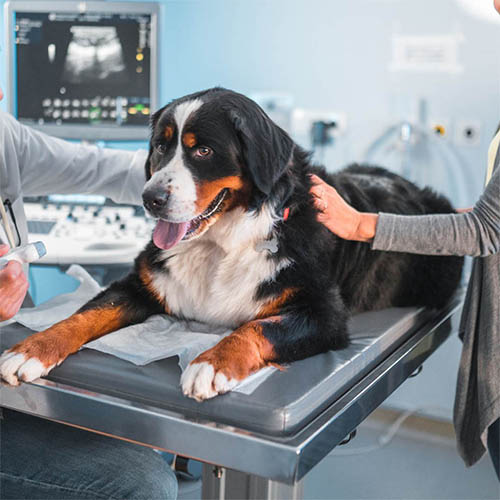
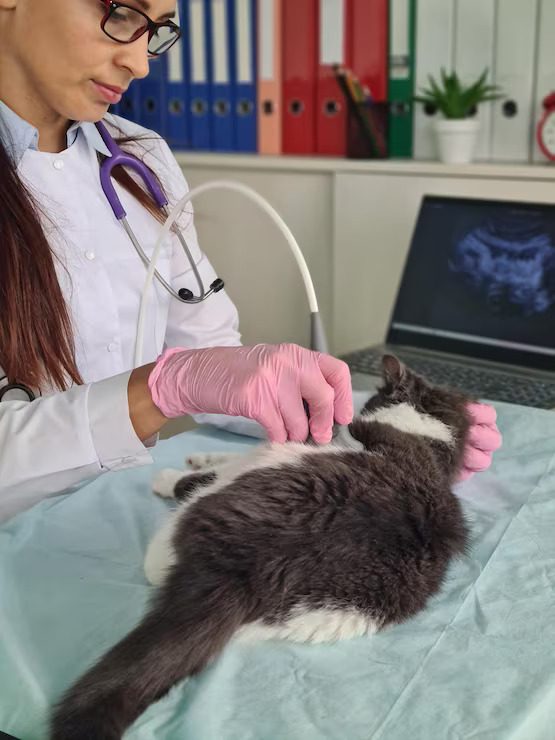
A pet echocardiogram is generally performed while your pet is lying comfortably on an examination table or specialized imaging surface. The veterinary team may gently position your pet and apply ultrasound gel to the area being examined. A small probe is then moved across the chest to capture images of the heart.
Benefits of echocardiography include:
- Noninvasive imaging of the heart
- Real-time assessment of heart function
- Evaluation of heart chambers and valves
- Information to support diagnosis and treatment planning
- Assistance with monitoring certain heart conditions over time
Schedule a Pet Echocardiogram
If your pet has a heart murmur, unexplained fatigue, breathing changes, or another sign of possible heart disease, Heartland Animal Hospital can help you determine the next steps. Our team can evaluate your pet’s needs and discuss appropriate diagnostic options.
Contact Heartland Animal Hospital to schedule an appointment and learn more about pet echocardiogram ultrasound in Owatonna, MN. Early evaluation can help identify potential heart problems and support timely veterinary care.